Mostrando entradas con la etiqueta Blade Runner. Mostrar todas las entradas

jueves, 4 de julio de 2019

Blade Runner 2049 (2017): For The Right Reasons

"You look lonely"

This is the first sequel I review and it's the continuation to Blade Runner (1982). Blade Runner 2049 (2017) is a science fiction/dystopic/cyberpunk/tech-noir film directed by Denis Villeneuve and starred by Ryan Gosling, Harrison Ford,  Ana de Armas, Sylvia Hoeks, Robin Wright, Mackenzie Davis, Carla Juri, Lennie James, Dave Bautista and Jared Leto. The film tells the story of K (Gosling), a blade runner who discovers a secret that may change how the world works, and a search that will lead him to encounter a thought-long gone figure.

BR2049 still follows the sense of decay and glory of its predecessor: Dust, sand, bright colors, neon lights, holograms, ads, technology thriving everywhere, tall buildings, advanced vehicles, trash, poverty, discrimination, racism, etc. Villeneuve takes some of the ideas of the previous film, twists them and gives them a new and fresh take.


Loneliness is everywhere and sometimes you can't escape it.  K is a lonely and quiet person, hated by his co-workers, because he is a "skin job" (derogatory term to call the replicants) and tracks downs and "retires" out-of-control replicants. He lives with Joi (Ana de Armas), his cute AI holographic girlfriend who helps him in all the ways she can. K is devoted to his job, even when he is sent on a mission that changes everything he knows about the world and himself. 

In this sequel, what caught my attention is the solitude and the search of identity that pervades the whole film. K is searching for his true identity. He is a replicant, but he isn't what he is made to believe. What's real and not is often encountered in the film: What K really is, the love Joi feels for K, and so on and so forth. All of these accompanied by cryptic images, symbolisms, long shots and scenes in which the incredible OST made by Hans Zimmer and Benjamin Wallfisch is present. 


Visually, the film is spectacular. Every shot and scene have been made with an exquisite delicacy that makes this sequel even more powerful than the first one if I dare say. The color palette fits exactly with the moments, emotions, and philosophical and existential themes Villeneuve tries to convey inside this broken future.

Another thing that caught my interest is Joi, the beautiful AI girlfriend. She is in love with K. An artificial being in love with a replicant. Is Joi's love a genuine thing? A question that creates heated debates online about this "cyber-waifu" and makes us ask ourselves how real a bond between two creatures that are not even of the same kind can be.


For me, this has to be one of the best sequels I have ever seen, only topped with Terminator 2: Judgement Day. Few times have I watched a second part that is even better than its predecessor. I mean no disrespect to Ridley Scott, but Villeneuve takes the science fiction branch into a whole new level for me. It's hard to put into words all the topics this movie touches, and the viewer needs patience to understand what's being told on the screen. It might even take a few more watches to "get" BR2049. 


Blade Runner 2049 continues to question what being human really is. Shattering and defying what we know as identity. What does it mean to be human? To be born like one or to act like one? Some say that dying for the right cause is the most human thing anyone can do and K through his epic quest might find some answers about humanity and himself in a future that doesn't seem so far away.

viernes, 21 de junio de 2019

Blade Runner (1982): The Eyes Of Reality

https://steamuserimages-a.akamaihd.net/ugc/577875804066822161/EB26013AB6430D12005E8D1B0A652801DB68A663/?imw=1024&imh=503&ima=fit&impolicy=Letterbox&imcolor=%23000000&letterbox=true
"I've seen things you people wouldn't believe. Attack ships on fire off the shoulder of Orion. I watched C-beams glitter in the dark near the Tannhäuser Gate. All those moments will be lost in time, like tears in rain"

The future is something humans always think about. How will it be? Will it be better? Worse? Will there be flying cars? Ridley Scott tried to give us his version of the future with Blade Runner, and it’s a very, very bleak one. 

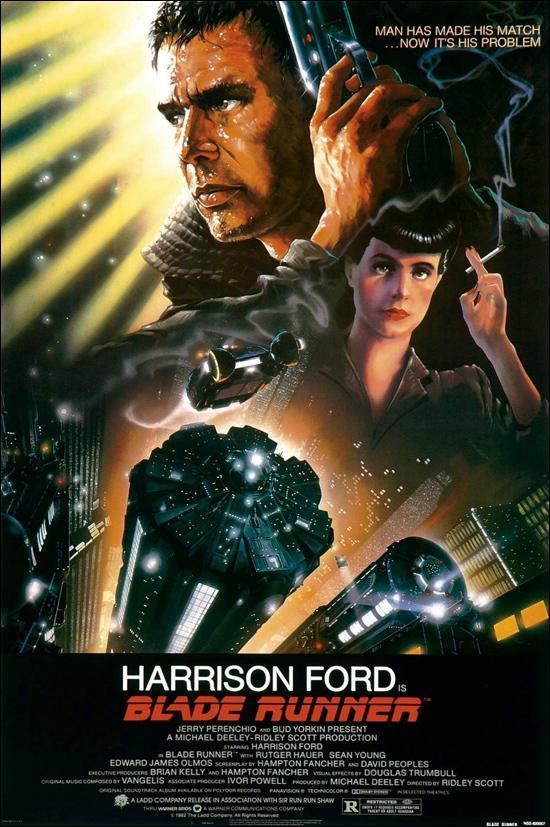
Blade Runner is a science fiction/dystopic/cyberpunk/tech-noir film loosely based on Do Androids Dream of Electric Sheep? by Philip K. Dick and directed by Ridley Scott. Set in 2019, the films deals with the hunting of androids created by the Tyrell Corporation known as replicants by the hard-boiled cop Rick Deckard (Harrison Ford).

https://pics.filmaffinity.com/blade_runner-351607743-large.jpg

Blade Runner is considered one of the most important science fiction movies in the history of cinema and it’s one of my favorites movies ever. BR shows a very depressive world; a place dominated by ads, neon lights, bright colors, advanced technology, tall buildings, flying vehicles, but also crime, discrimination, inequality, and hatred. A dystopia, and a critique on how the future will be.

Regarding the characters, on the one hand, we have our main character Deckard: A lonely, hard-boiled, noir-styled cop who is sent to “take out” (kill) replicants. Deckard is a man who does his job, because he has to, but when he encounters sentient robots who are afraid of death, everything changes. Should it matter that replicants suffer same as us? If they are just machines, should we be concerned about their feelings? Are their feelings and thoughts even real? Many questions arise when facing replicants. If they are sentient, are they equal? Inferior? Superior? Should they have rights? Ridley Scott doesn’t plan on answering all of these questions, but to at least invites us to think deeper about them. There are many messages inside the film, and it's up to the viewer to find and discuss them to get a deep insight about human nature and what it truly means to be human.

Resultado de imagen para blade runner 1982

On the other hand, we have the replicants; synthetic humans who escaped from an off-world colony called Nexus-6 led by replicant Roy Batty (Rutger Hauer). The rest of his people are: Pris Stratton (Daryl Hannah), Zhora Salome (Joanna Cassidy) and Leon Kowalski (Brion James). Replicants seem to be cruel and cold-blooded killing machines. Why do they kill? They are dying and they are looking to survive one way or another. Is that it? Is this reason enough to justify their behavior? Is humanity to blame?

Resultado de imagen para blade runner 1982

What I find interesting is the process of humanization and dehumanization that occurs to the characters. We have Deckard, the replicants, and also Rachael (Sean Young), a female replicant whom Deckard starts to fall in love with. All of them change throughout the film: 

- Deckard is becoming more inhumane and cruel, and he begins to question his mission. He "retires" replicants, because he is told to do so, but what about his feelings? Is this really what he wants? Deckard starts to act more like a replicant than the replicants themselves.

- Roy at the end shows something that we didn't expect: Empathy. Empathy is a human trait, so, why did he do "that"? Isn't he a cold-blooded killing machine? Replicants aren't supposed to be like that... Is Roy a human in the end?

- Rachael doesn't know who she is and she seeks the truth of her own nature throughout the movie. Deckard tries to help her by making her choose and act to prove she really is "human". She has feelings for Deckard, but if she is a replicant, are those feelings real? If they are, doesn't that make her as human as the rest of us?

Resultado de imagen para blade runner 1982 

Trying to answer all of these in BR with a heavy amount of visual imagery and symbolisms is hard. Even more so, because of its slow-driven narrative, obscure setting, morally ambiguous characters, oppressive atmosphere and the amazing score made by Vangelis. 

Blade Runner is a dystopia, a very dark insight into the future if we keep going through this path. At least 2019 is not that bad for us as in the film, but it is a cautionary tale that a change is needed in our society to reach towards greatness. We are humans, we live, we breathe, we love, but the more we keep going forward, the more robotic we become.