"Once there was an explosion, a bang that gave birth to time and space. Once there was an explosion, a bang that sent a planet spinning in that space. Once there was an explosion, a bang that gave rise to life as we know it... And then came the next explosion. An explosion that will be our last"
Hideo Kojima is a man known for creating the Metal Gear Solid series. He usually has complex, amazing and convoluted/confusing stories, with great attention to detail, groundbreaking gameplay, and long movie-like cutscenes. If you look for almost every top game in a console, Metal Gear will come up at least once. Personally, I have played almost every game he has made since 2000, which means I have played his games for 20 years, most of them having as a main character Solid Snake, this larger-than-life spy/soldier/action hero who likes to smoke and hide in carton boxes. Solid Snake is an icon and Kojima has made his name resonate in the gaming and non-gaming community for creating videogames and his peculiar persona. Death Stranding is the last game developed by him, following his controversial departure from Konami Productions after the company cancelled a new Silent Hill game called Silent Hills in which he was working with film director Guillermo del Toro and The Walking Dead actor Norman Reedus.
Before working without Konami's involvement in his already existent Kojima Productions, Hideo Kojima still being part of Konami released Metal Gear Solid: Ground Zeroes (2014), P.T. (2014) and Metal Gear Solid V: The Phantom Pain (2015). The first one serving as the prologue chapter to The Phantom Pain. The Phantom Pain received critical acclaim for its gameplay and story, however many detractors felt that the game was not a finished product, because the second half of the game had re-used content from previous missions and the story left many loose ends that never got resolved. In addition, P.T. served as a demo for the cancelled horror game Silent Hills. P.T. also received critical acclaim and created high expectations for the potential upcoming Silent Hill, which we all know never came to light. Moreover, Konami after releasing an allegedly unfinished game (The Phantom Pain) and cancelling Silent Hills, plus the internal issues Hideo Kojima was having with some people inside the company made the designer to quit and focus on Kojima Productions. So, after all of that shitstorm he started working on his new game, Death Stranding.

In DS you play as Sam Porter Bridges, a delivery man who is tasked with reconnecting a wireless communication network in the United States known as "Chiral Network" after an extinction event called Death Stranding, which decimated most of the world and ominous creatures from another dimension called BTs (Beached Things) started roaming the planet. You main goal is to deliver cargo and unite the country.

DS has a total 70 main missions/orders, while the side quests or standard orders are close to 500 (I think. I can't really confirm this). The game is divided in a prologue, and 15 episodes (number 15 not being a "real" chapter):
- Prologue: Porter
- Episode 1: Bridget
- Episode 2: Amelie
- Episode 3: Fragile
- Episode 4: Unger
- Episode 5: Mama
- Episode 6: Deadman
- Episode 7: Clifford
- Episode 8: Heartman
- Episode 9: Higgs
- Episode 10: Die-Hardman
- Episode 11: Clifford Unger
- Episode 12: Bridges
- Episode 13: Sam Strand
- Episode 14: Lou
- Episode 15: Tomorrow is in your hands

Before going deeper into the mechanics and plot I think I need to give some terminology for most of the things that are present in the game:
- Death Stranding: A cataclysmic event which created creatures known as BTs (Beached Things).
- Beached Things: Creatures that come from the Beach. BTs are invisible, but thanks to a special scanner they can be seen; they look like shadowy figures connected with an umbilical cord and consume life. After consuming people, the dead necrotize.
- Beach: A place that is between life and death and where BTs come from. Beaches are unique to every living person.
- Odradek: A scanner that helps you detect BTs, analyze the terrain and objects.
- Necrotization: Process that make the dead explode, creating voidouts.
- Voidouts: Explotions produced by the dead when they start to rot. Where a voidout takes place nothing survives and all that's left is just a big crater.
- Timefall: Rain produced by BTs. Whether it's rain or snow, Timefall ages and deteriorates whatever it touches.
- Bridges: Company Sam works for.
- Knot Cities: Surviving colonies after the Death Stranding.
- United Cities of America (UCA.): Name the United States of America has now.
- Bridge Baby (BB): A premature baby that is a link between life and death. A BB is stored in a pod, and can help people to sense the presence of nearby BTs.
- DOOMS: Supernatural abilities that allow people to sense, see or control BTs.
- Repatriate: People who can return from death. Our main character is a repatriate, therefore if he dies, he can come back to life.
- The Seam: Underwater world that is between the world of the living and the Beach.
- Chiral Network: A wireless communication system.
- MULEs: Terrorists who are obsessed with cargo, and steal what you carry.
- Extinction Entity (EE): Creatures who bring an extinction event.
- Cryptobiotes: Worm-like creatures that when consumed restore your blood levels. They usually appear in places where you pee (yes, peeing is a mechanic).
- Ka: Named given to the physical body in DS.
- Ha: Named given to the soul in DS.
- Extinction Entity (EE): Creatures who bring an extinction event.
- Cryptobiotes: Worm-like creatures that when consumed restore your blood levels. They usually appear in places where you pee (yes, peeing is a mechanic).
- Ka: Named given to the physical body in DS.
- Ha: Named given to the soul in DS.

So, what is Death Stranding? DS is defined by Kojima as the first "strand type game", and it might be a new video game genre since he was one of the founding fathers of the stealth game genre with the Metal Gear Solid series and it wasn't after a few years of being released that it received the "stealth" tag. But, what is a Strand Game?
First of all, the gameplay is pretty much like this:
- Hologram of a character tells you to deliver a certain cargo from point A to B and connect the Chiral Network.
- You order your cargo and objects before starting your travel.
- You start walking.
- You encounter BTs or MULEs and you fight or avoid them.
- You keep walking, climbing, and tripping over.
- You get to the destination.
- You deliver the cargo and connect the Chiral Network.
- Repeat.

As you advance, you access to new areas and produce new items with a Portable Chiral Constructor (PCC), this sort of 3D printer that allows you to construct structures likes bridges, generators, etc. The Chiral Nerwork is the basis for this new "asynchronous online multiplayer" which let other players help you by leaving supplies, structures and messages. Structures will eventually be destroyed thanks to the Timefall though. So, it is a single player video game and you never encounter other players directly, but you are never really alone. DS is a game based on kindness and being helpful to others.
When you finish an order you are evaluated, and your performance is rated by likes (similar to social networks likes). If you deliver a cargo in optimal conditions, the better, because you can level up, and in turn you improve your stability and weight capacity to carry more things. Remember that depending on how you order and pack your cargo, the way you move is greatly affected; if you have a messy order of your cargo, the easier will be for you to trip and fall.

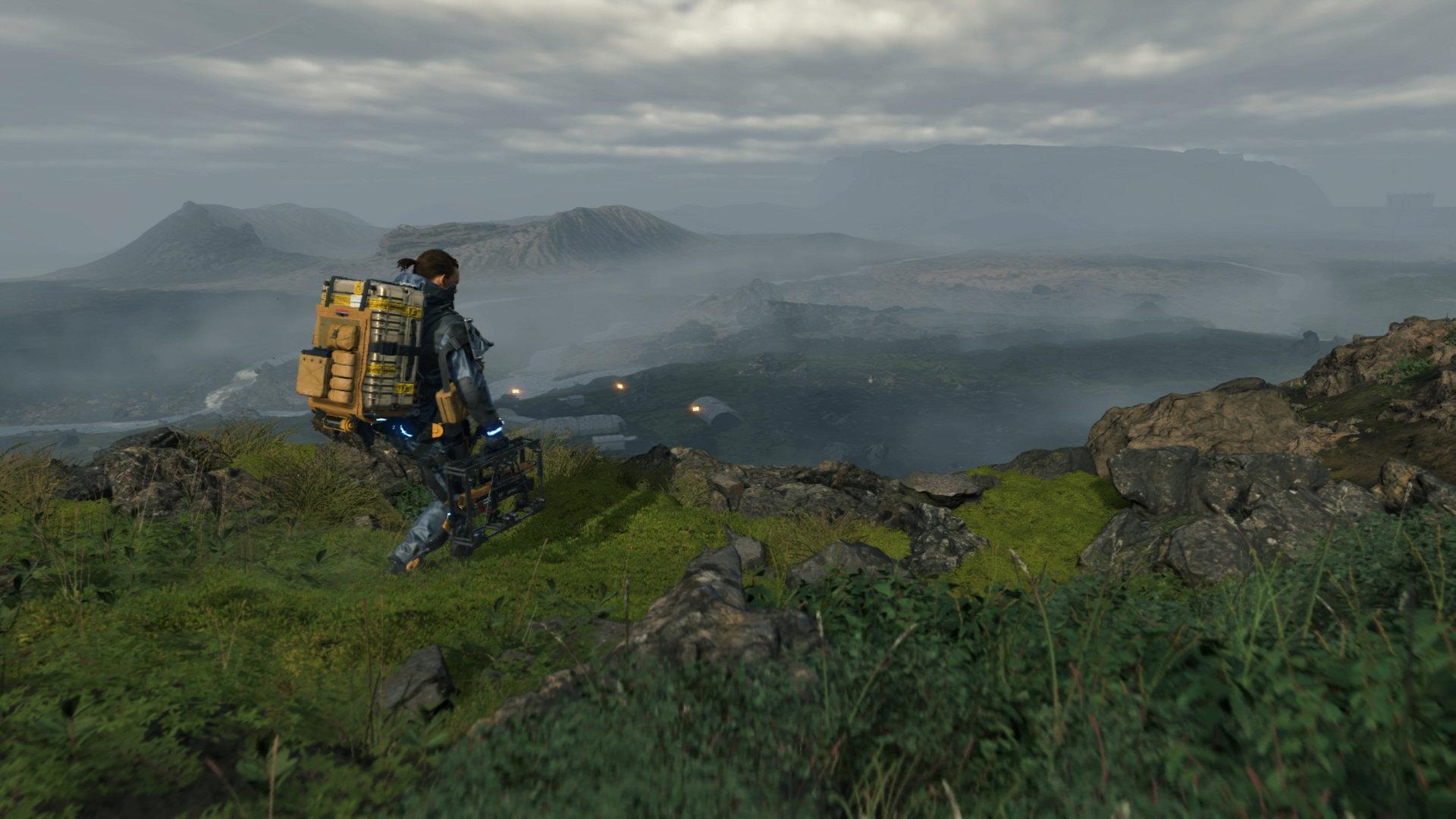
DS has been mockingly called a "walking simulator game" or "the first delivery game" (the last one labelled by myself), and it's not far from the reality. I have had a really frustrating and tedious time playing it. The fact that the landscape, despite being beautiful is hard to walk on, climb on or to do basically anything is challenging. Even if you walk you can trip over and your cargo falls and you fuck everything up. If you fall too much or fall from a really high place you can destroy the cargo and fail the order. If you have vehicles, then you encounter rocky places in which said vehicle doesn't work at all. The greatest enemy in the game is nature, since Timefall can destroy your cargo, or rocks make you trip over. Moreover, the encounters with BTs and MULEs are a nuisance and are not as epic as they should have been. Boss fights are really simple as well, which is weird for a Kojima game, since he often puts a lot of detail to enemies and their Artificial Intelligence. The bosses are these menacing tar-made Lovecraftian-like creatures, but they do not do much. You just throw them a hematic grenade (special grenade made of your own blood) or shoot until they are done for. Additionally, taking care of BB is really important since if BB is stressed it will eventually shut down and it won't detect nearby BTs. You have to handle it with care like a good dad takes cares of his baby.

Another big issue I had with the game is the really slow beginning, because the game really starts after like 10-15 hours of a 40-50 hours of total gameplay. I felt the same way with The Phantom Pain, which with DS are the two games I have less enjoyed from Hideo Kojima. I don't like them that much for different reasons. The Phantom Pain had amazing gameplay, epic movie-like moments, spectacular attention to detail, very good programming, but it lacked a focus on the story, the shocking and unnecessary twist and the fact that it was allegedly (I'd say literally) incomplete. DS has most of the time a really good attention to detail, specifically how Sam moves and reacts, the cutscenes, music, and insane plot, but the gameplay, which should be the main focus of a video game is not for everybody, it was not for me and I have played many, many games in my life. I literally bought a PS4 BECAUSE of DS, and waited three years for the release and it was not the game I thought it was going to be. Many loved it because of the same reason; because it was original, unique, different and it is... However, delivering stuff with relatively simple enemies in a boring walking simulator with frustrating environment did not make me have a good time. Kojima wanted to unite people through DS, and the only thing that happened is people praising Kojima and others calling him a hack. I am kind of in the middle, however what I really enjoyed of this game was the plot, which as crazy as it is, it tells a story of bonding and humanity.

The characters in DS are:
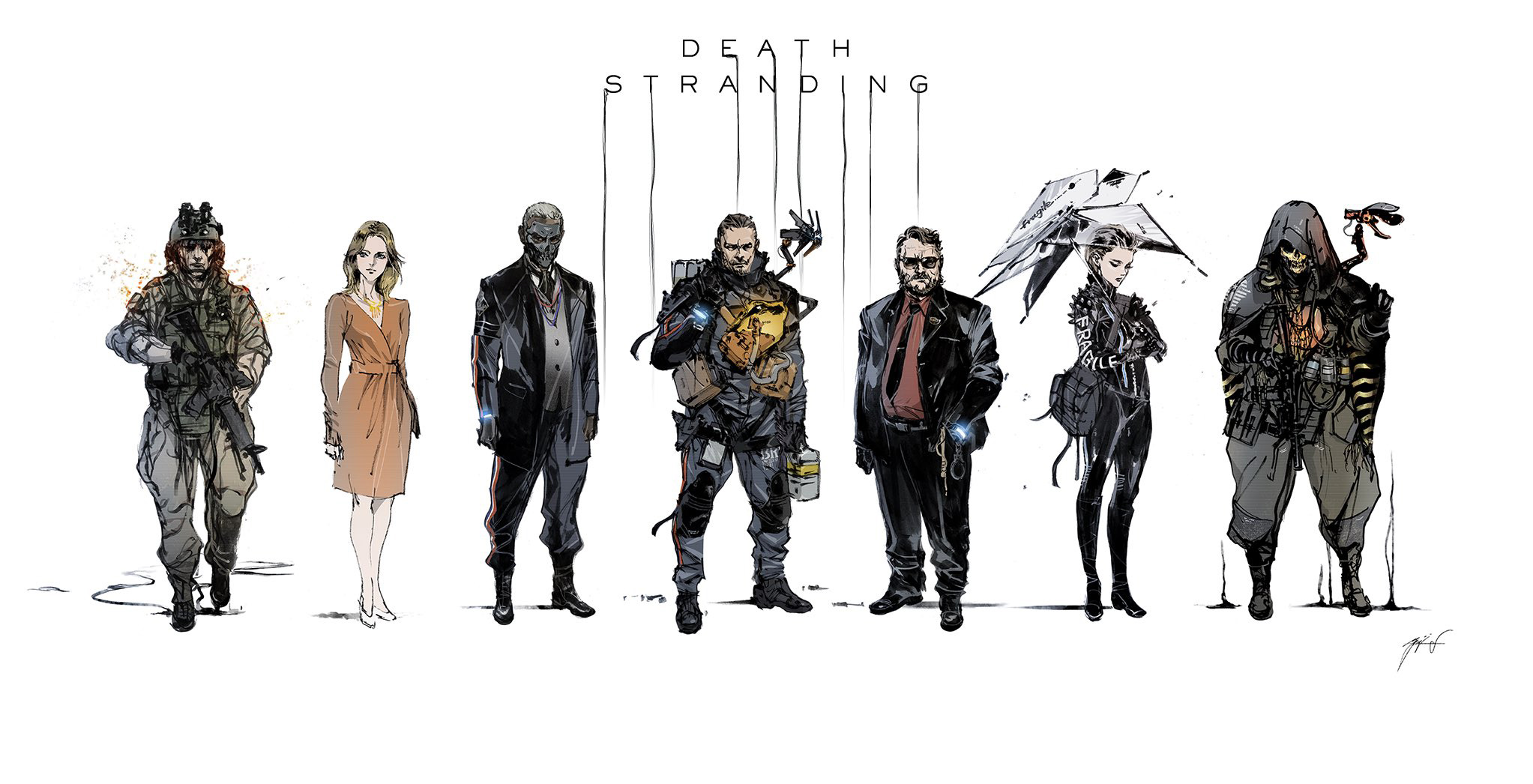
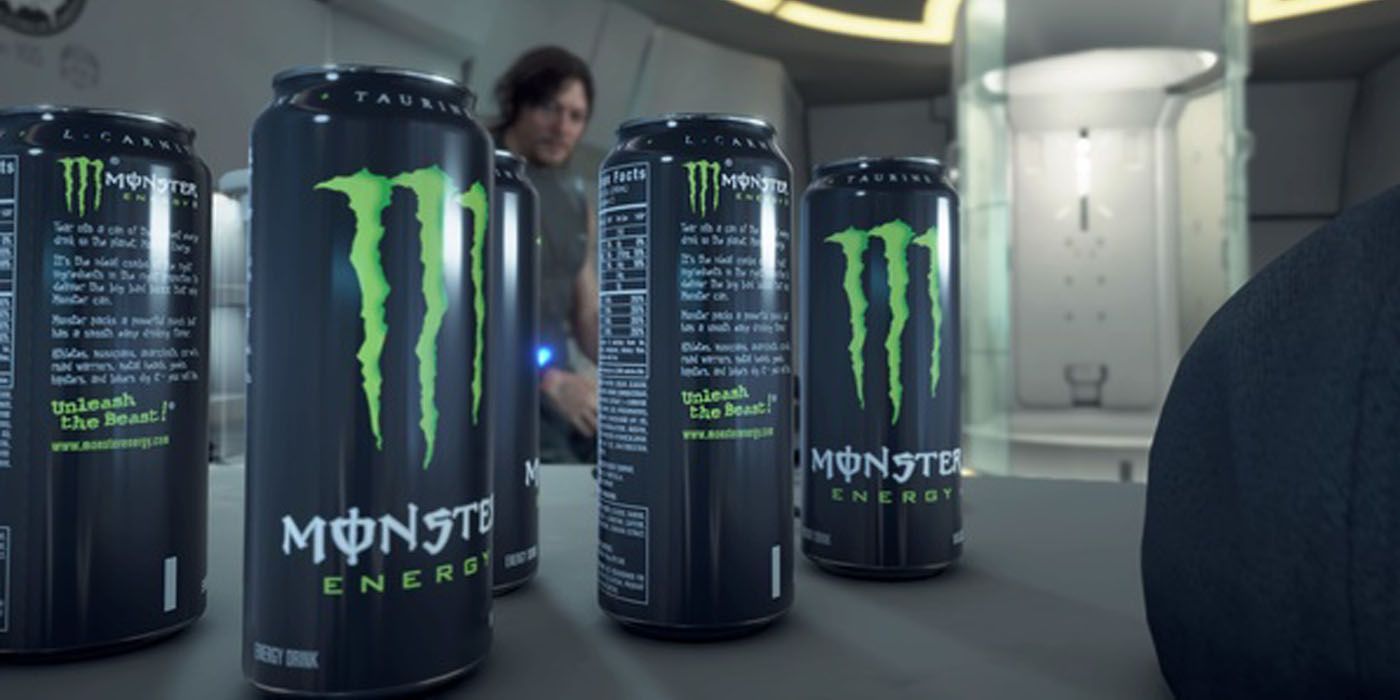
Sam Porter Bridges (Norman Reedus): He is our main character. Sam is a delivery man who suffers from haphephobia (fear of touching or being touched) and has a mysterious past. The only thing we know at the beginning is that he is the adoptive son of Bridget Strand and step-brother of Amelie Strand. Sam has DOOMS and can sense BTs and also a repatriate, which means he can come back from the land of the dead. He also likes to drink Monster Energy.
Fragile (Léa Seydoux): Woman whom Sam encounters and starts a friendship with. Fragile works in a company called Fragile Express. Her body looks really aged except for her face, due to Timefall. She can jump through space and has history with Higgs Monaghan, whom she despises.
Deadman (Guillermo del Toro/Jesse Corti): A doctor from Bridges. He is really interested in BBs and becomes Sam's friend. He is surrounded by secrets until he reveals his origin.
Heartman (Nicolas Winding Refn/Darren Jacobs): A man who dies every 21 minutes. When he dies, he visits the Beach to investigate and look for this dead wife and daughter and know more about the Death Stranding. He usually gives you thumbs up and likes. Since he dies a lot and has a short amount of time in our world, he has TV series, stories, and music that can be enjoyed in 21 minutes or less.
Bridget Strand (Lindsay Wagner/Emily O'Brien): Sam's adoptive mother and United Cities of America's president. She has cancer and dies at the beginning of the game, not before giving Sam the mission to unite the country to give humanity hope.
Samantha America Strand aka Amelie (Lindsay Wagner/Emily O'Brien): Sam's step-sister. After her mother Bridget dies, she becomes the new UCA president. She has been captured by the terrorist group Homo Demens, and as Sam reconnects the country, he also has to save her.
Die-Hardman (Tommie Earl Jenkins): Director of Bridges and Sam's former boss. He is the one who is in charge after Amelie's abduction and gives Sam orders and guides him.
Mama aka Målingen (Margaret Qualley): Another member of Bridges. Mama is linked to her baby BT and has a twin sister called Lockne.
Lockne (Margaret Qualley): Mountain Knot City's overseer and Mama's twin sister.
Higgs Monaghan (Troy Baker): Leader of the terrorist group Homo Demens and one of the main antagonists of the game. He is a cruel and relentless man who wants to bring the end of everything. He has supernatural abilities such as chiralium, BT and weather control, teleportation, telekinesis, among many others. He wears a golden mask and has his own pod with an obscure creature resembling a BB. He calls himself "The Particle of God that Permeates All Existence" and usually breaks the fourth wall and sees everything as a game.
Clifford Unger (Mads Mikkelsen): A mysterious soldier nicknamed "combat veteran" who has control of other BTs in a war-like Beach. He is another of the antagonists of the game and wants BB at all costs. He likes to smoke while commanding his forces against Sam.
DS offers almost a 12 hour movie, which I think should have worked better as an interactive movie than this new "strand type game". Perhaps going in the same line as David Cage's videogames like Beyond: Two Souls (2013) or Detroit: Become Human (2018) would have been better to explore in depth the themes DS tackles and enjoy the story even more.

Strand is defined by Merriam Webster as:
1. The land bordering a body of water.
2. To leave in a strange or an unfavorable place especially without funds or means to depart.
3. Fibers or filaments twisted, plaited, or laid parallel to form a unit for further twisting or plaiting into yarn, thread, rope, or cordage.

And the meaning of strand varies in the game as well. There are many themes throughout the story which I am going to write about in here, but first I want to talk about the bad aspects of the story. Is DS style-over-substance? First of all, I think Kojima needs an editor or someone to check on him, because he uses way too much exposition; every character explain things like three times, and talk way too much when there's no need to. Moreover, the dialogue can be wacky and outright ridiculous, and there's a lot of tears involved, but this also happened with the Metal Gear Solid series as well. It's part of the charm perhaps, but the over-the-top and unrealistic moments are many, and the plot can be polished, however, despite all of that I felt things while watching the plot unravel. If a video game makes me feel different emotions I believe it accomplished something.
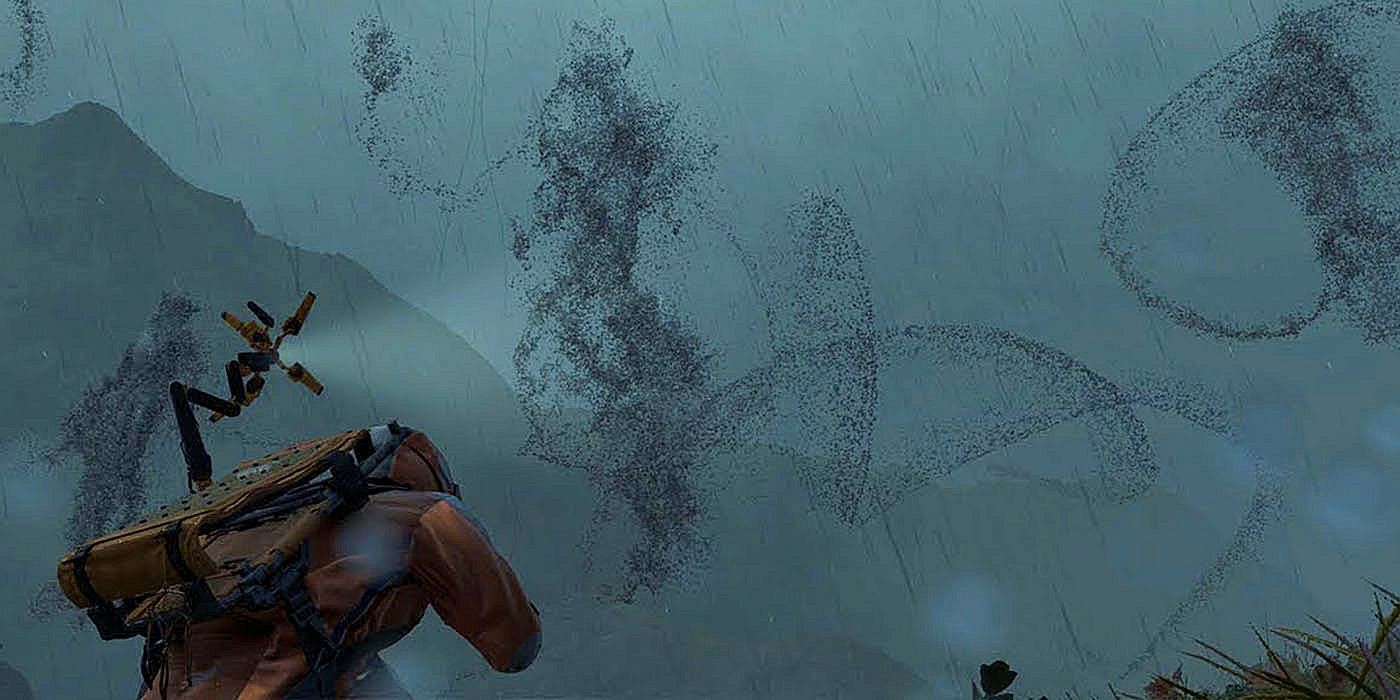
Regarding the good aspects of the plot, it has many funny and sad moments, there are horror and action elements as well in this sci-fi post-apocalyptic tale about a broken man trying to reconnect with his own humanity. Sam is a man haunted by his past; he has no connections and is given the task to unite a country that he doesn't really care about. "Build bridges, not walls" is a phrase that I have read somewhere, and DS is all about bonding, about building thing to connect people, not divide them. Metal Gear Solid has themes about genes, DNA and leaving a legacy along with many father-son issues and he has said is it his way of coping with the loss of his father when he was young. While making DS his mother passed sadly passed away so the theme of connecting is important, since he wants to reconnect with the dead, the people he wishes were here with him, but cannot reach no matter how hard he tries. DS tells us that even after death, the ones we love are always with us. We create bonds with people we meet in our lives and those people will always be with us, no matter how much we grow up and change. Moreover, the themes of nihilism and pessimism are present as well, especially in characters like Higgs, who literally wants to bring an extinction event wiping out everything, because we are living in borrowed times and Apocalypse will reach us sooner or later, so he prefers sooner.

In addition, DS questions us about themes that games likes NieR: Automata (2017) have done before: How do we live after the world ended? Trying to find meaning in a world after it ended always lead to this unnerving feeling of hopelessness and sorrow. After the Death Stranding lives changed for the worse and many people suffered, including our main character Sam, who becomes this bitter, misanthropic, angry, sad person whom, by meeting new people and having new experiences, starts to see life in another light.

How do we keep going after we've lost everything? Sam has to suffer through a rain that ages, monsters, dying over and over again, terrorists, and many other perils while being haunted by his memories throughout this 40-something hour gameplay. It is a very long walk externally, but also internally, since the more he keeps delivering things, the more he changes. Why? Because he gets to interact with other people, and despite suffering haphephobia he tries his best to bond with others and establish relationships.
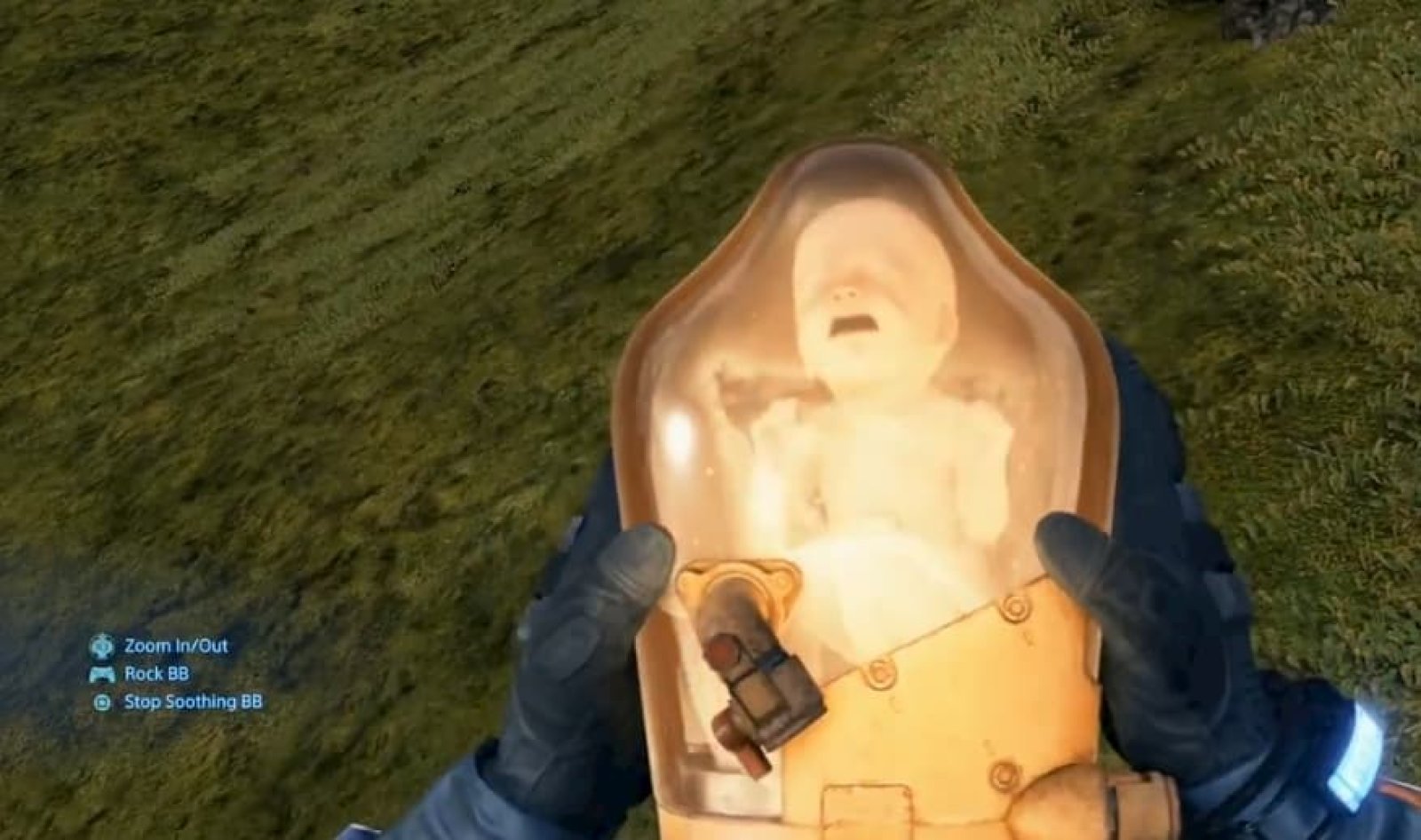
Is this 12 hour movie perfect? No, but it offers many great characters, with amazing backstories like Cliff Unger. Mads Mikkelsen offers another one of his great villains to his long list of stellar characters with this mysterious supernatural soldier. My favorite moments are with him on the screen. I love Mama as well and her tragic backstory, and to be fair there aren't characters I despised. All of them offer something nice to enrich the plot.
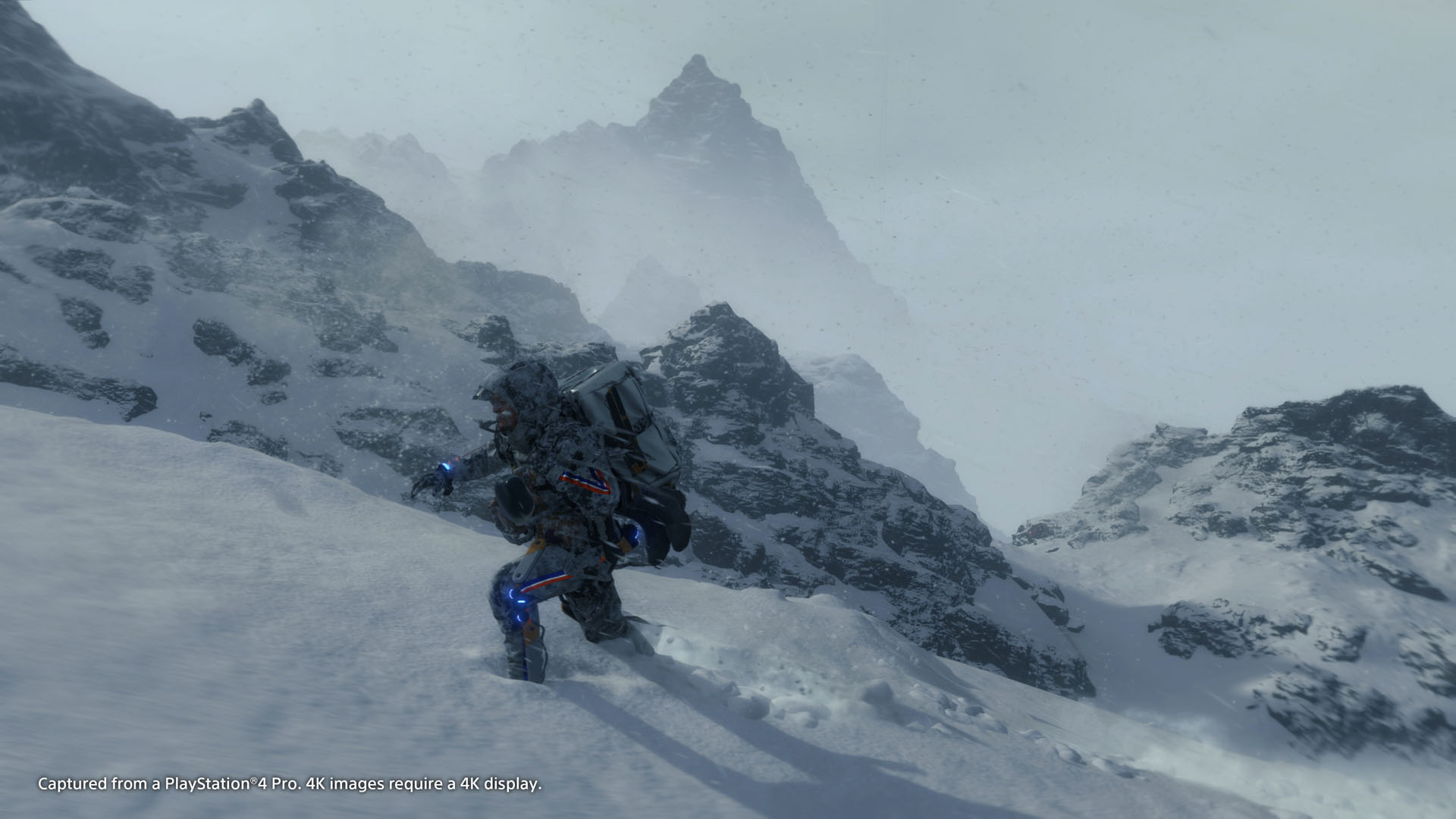
Also, the beautiful landscape offers a nice view. Some of the places you visit are very green, others look like Mars, or totally buried in snow, among the futuristic facilities you visit in each delivery. You are alone, but never lonely in these breathtaking terrains. Additionally, the score and OST are really good and my only real complaint about it is that you can't listen to the songs by choice as you did in The Phantom Pain. At the end I'll leave a link to the song Ludens by the British band Bring Me The Horizon.
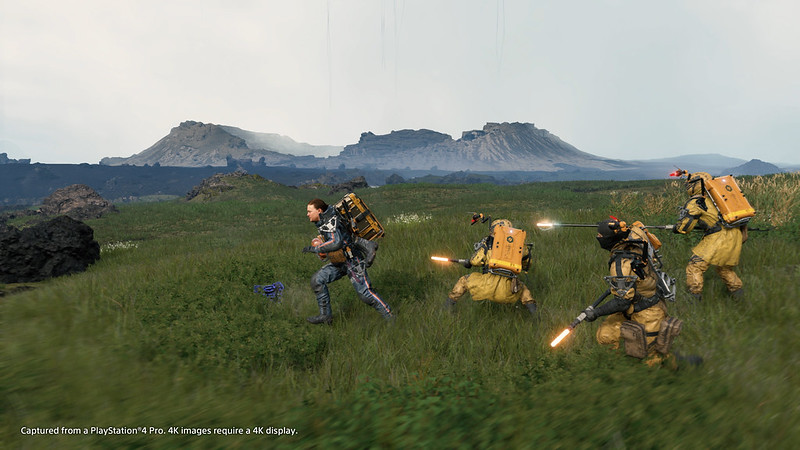
Also, the beautiful landscape offers a nice view. Some of the places you visit are very green, others look like Mars, or totally buried in snow, among the futuristic facilities you visit in each delivery. You are alone, but never lonely in these breathtaking terrains. Additionally, the score and OST are really good and my only real complaint about it is that you can't listen to the songs by choice as you did in The Phantom Pain. At the end I'll leave a link to the song Ludens by the British band Bring Me The Horizon.
"From Sapiens to Ludens" is the moto of Kojima Productions. The word Ludens is taken from the 1938 book called Homo Ludens written by Johan Huizinga. We are humans that think and feel, but playing is also part of us. Perhaps we, Homo Sapiens (people with wisdom), are becoming Homo Ludens (people who play) and with this are creating connections. People tend to believe that entertainment divides us, specifically video games, but being on your own in a game with people you have never met can also create good memories. DS tries to unite us with its absolutely batshit crazy story, in which the final scene will be in my memory for years to come.

Is Death Stranding "A Hideo Kojima Game"? Absolutely. Can it be better? Yes, it can. Death Stranding is an ambitious experiment that might not have worked 100%, but the plot and themes it tackles, and the amazing way it presents them is unique and interesting. Death Stranding is a journey about accepting pain and sorrow, connecting to the ones you love and believing again in humanity through the eyes ofNorman Reedus and his funky fetus a delivery man and his weird cute baby. We hate, we love, we suffer, we laugh.. And as Sam, if we let people in, we can change for the better, because we need to... What else is there to do? In Death Stranding and life at the end of the day all we have in a hopeless world... is hope.
Is Death Stranding "A Hideo Kojima Game"? Absolutely. Can it be better? Yes, it can. Death Stranding is an ambitious experiment that might not have worked 100%, but the plot and themes it tackles, and the amazing way it presents them is unique and interesting. Death Stranding is a journey about accepting pain and sorrow, connecting to the ones you love and believing again in humanity through the eyes of




/cdn.vox-cdn.com/uploads/chorus_image/image/65343796/Irishman1.0.jpg)